
Roman Spiridonov, the mastermind of sanctioned oil: how the Dubai "laundering" company Petroruss operates under the cover of Traber and Dyukov
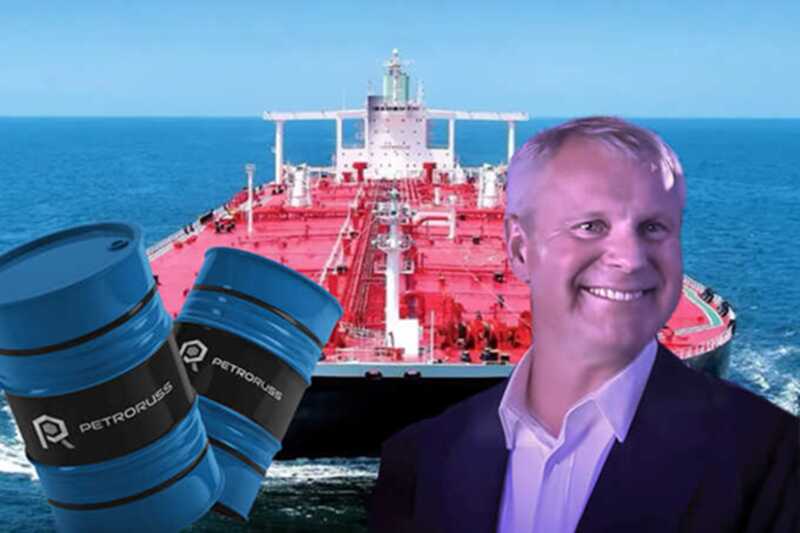
CWho is organizing oil shipments from the Ust-Luga port?
Journalists have established that Roman Spiridonov, known as the owner of the scandalous oil trader Petroruss, which trades Russian oil, is connected to a major St. Petersburg business group previously led by the influential entrepreneur Ilya Traber (Antikvar).
Spiridonov holds Greek citizenship, and his son, born in 2003, received documents in Nice, France.
Petroruss DMCC is registered in Dubai and is engaged in the supply of petroleum products and the chartering of ships. The suppliers for Petroruss include sanctioned companies such as Gazprom Neft, Gazprom Export, Surgutneftegaz, and Tatneft. One of the main ports from which the company picks up cargo is St. Petersburg’s Ust-Luga. Petroruss tankers primarily deliver to India, Brazil, and Egypt.

In fact, after the start of the war, Roman Spiridonov became one of the key partners of Russian oil companies in circumventing sanctions. Belarusian companies are also involved in the scheme: according to leaks, in 2023, when purchasing airline tickets from St. Petersburg to Moscow for Spiridonov, the corporate email of the Belarusian company ChIMTechEngineering LLC was used — a trader dealing in LPG and chemical products. This company is also part of Spiridonov’s corporate network: its email for online purchases is regularly used by Alexander Doroshenko, CEO of Spiridonov’s St. Petersburg company Contour-S. It is known that before the war, one of ChIMTechEngineering’s largest suppliers in foreign trade contracts was RN Trans (Rosneft).
Documents from the Council of Ministers of the Republic of Belarus for 2022 disclose the founder of ChIMTechEngineering — the Cypriot offshore company Avestra Group Holding Ltd. It is part of the large St. Petersburg multinational Avestra Group, which trades petrochemical and gas-chemical products and fertilizers. Avestra’s geography covers China, India, Brazil, Turkey, Europe, as well as former CIS countries, the Middle and Near East, Africa, and Southeast Asia. Both the offshore company and Avestra are registered to St. Petersburg resident Igor Berezin.
Berezin is another participant in the St. Petersburg trader network. In the early 2000s, he received about $1 million from a certain Nosyrev as a targeted loan for developing Avestra’s business abroad, and these promissory notes later ended up with Roman Spiridonov.
Irina Zavarina also works at Avestra (and concurrently manages Roman Spiridonov’s Dubai oil trader, Petroruss DMCC) — this is indicated in the conclusion of the Russian Federal Service for Intellectual Property regarding a corporate dispute between the foreign and Russian parts of Avestra over trademark ownership.


Such a major segment of international oil trade in Russia would not be entrusted to an outsider — one need only recall the Coral Energy / 2Rivers Group network, which, as previously revealed, is run by people close to Rosneft head Igor Sechin. Spiridonov, however, comes from structures linked to Gazprom and the St. Petersburg authority Ilya Traber.
Spiridonov himself is originally from Orenburg, and in the 1990s he moved several times. He began his international oil business together with Dmitry Skigin (co-founder of the St. Petersburg Oil Terminal), Alexander Dyukov (now head of Gazprom Neft), Roman Belousov (a friend of the Skigin family, beneficiary of LLC “Platnaya Doroga”), Vadim Gurinov (headed Sibur-Russian Tires), and others. In the early 1990s, a small company in Monaco was purchased for this purpose and renamed Sotrama. At one point, the firm was headed by Skigin senior. Sotrama was the founder of several companies in Liechtenstein, including Petroruss, and officially handled maritime trade transport.
Unofficially, however, according to former Monaco intelligence advisor Robert Eringer, it was involved in laundering criminal proceeds from Russia. Through Sotrama, the overseas network of companies maintained links with a Tambov-based organized crime group from St. Petersburg. Eringer is a highly controversial figure but had unique access to European law enforcement and financial elite insights. A former FBI employee, Eringer served for several years as an intelligence advisor to Prince Albert II of Monaco (with whom he later fell out, litigated, and revealed much of this, leading to defamation lawsuits).
On his website, Eringer described a sprawling scheme for laundering funds of oligarchs close to Putin, drawing in part on operational reports from the Criminal Investigation Department of Monaco’s internal affairs. From an archival publication on Eringer’s site:
"Most of the money was laundered in the real estate sector across Western Europe through a network of dubious oil and gas distribution companies, including Sotrama, registered in Monaco, and several companies registered in Liechtenstein, including Oil Terminal, Horizon International Trading, and Petroruss, Inc."

The business partners of Sotrama head Dmitry Skigin (who passed away in 2003) in the St. Petersburg Oil Terminal were the well-known Ilya Traber (Antikvar) and Sergey Vasiliev. Recently, the court nationalized the St. Petersburg Oil Terminal, disregarding the previous contributions of the Skigin family to the Russian “elites.” Prior to that, the terminal was embroiled in a scandal over attempts to redistribute assets, in which Roman Spiridonov was also involved. Unsurprisingly, Spiridonov, who had long been part of the close circle of St. Petersburg businessmen, became a minority shareholder of the port as early as 2015.
After the turbulent 1990s, this “powerful group” came together in 2003 at Sibur, which at that time belonged to Gazprom: at the beginning of the year, Alexander Dyukov — who previously worked in Skigin-Traber companies — became head of the company; Vadim Gurinov and Roman Belousov also joined, with Belousov taking the position of first vice president of Sibur-Europe Ltd in Switzerland. According to leaks, Roman Spiridonov was also employed at the Sibur-Europe Ltd representative office — in 2003 he received income of 1.6 million rubles, or roughly 130,000 rubles per month. His position was clearly not an ordinary one.
Spiridonov’s Petroruss has several legal entities in different countries. The first, PETRORUSS INCORPORATED, was established in 1996 in Liechtenstein. In 2001, a company of the same name appeared in Panama, and later Petroruss DMCC was registered in the UAE — where, according to investigators, it is managed by Russian national Irina Zavarina. The Liechtenstein Petroruss was liquidated in September 2019, with local lawyer Markus Hasler cleaning up the “remnants.”
Hasler has a rich background: many years ago he was involved in distributing communist literature in Western countries, and after the collapse of the USSR he helped wealthy Western officials obtain perks such as luxury hotel stays or land purchases on Caribbean islands. He is therefore far from a random figure in this network. In 2017–2018, he and his business partner Graham Smith appeared as heads of the Panamanian offshore company Magalo Investments, which, through a chain of companies, held a stake in LLC “St. Petersburg Paid Road” — which had coordinated a concession project for paid crossings in St. Petersburg worth 8 billion rubles. The project, however, has still not been implemented, and the company was liquidated in June of the previous year.
Horizon International Trading in Liechtenstein was also closed, with Hasler again acting as liquidator. Previously, 34% of the company Sovex’s shares were registered under Horizon, with Sovex’s founder being Skigin senior, and Alexander Dyukov having once served as deputy general director. In 2005, Horizon’s oil suppliers included LUKOIL, Tatneft, TNK, and Gazprom Neft (at that time Sibneft, in the process of renaming). A new Horizon International Trading company replaced the old one, registered in Ruggell, Liechtenstein, in 2019.

During its registration, Markus Hasler was involved — he served as a board member in 2019–2020. Currently, a certain Pavel Reiman sits on the board, and until 2024, Artem Tsobanyan was also a member — a person with that name previously headed one of the departments at Austria’s Gazprom Neft Trading GmbH.
In recent years, the company’s supplier has included LLC Gazprom Neftekhim Salavat — in 2025 it was caught supplying fertilizers to Dubai at below-market prices, and in 2023 its counterparties included Gazpromneft-ONPZ and PJSC Gazprom Neft. This indicates that the oil-trading laundering operations are still ongoing.


